
Share this content :
When people think about buying a home, they usually focus on the monthly payment. But there’s another piece that matters just as much—taxes. Understanding how taxes affect your mortgage can change how you see the real cost of owning a home.
Your mortgage is not just a bill you pay every month. It also connects to your tax situation in ways that can either save you money or cost you more over time. The tax impact on home loans can influence your long-term financial plan, especially if you know how to use the available deductions correctly.
At the same time, it’s important to understand how property taxes affect your monthly mortgage payment, since they are often included in what you pay every month. When you look at property taxes and mortgage together, you get a clearer picture of your true housing cost.
What Makes Up Your Mortgage Payment
Your mortgage payment is made up of a few simple parts:
- Principal – the amount you borrowed
- Interest – the cost of borrowing the money
- Property taxes – paid to your local government
- Insurance – protects your home (optional but common)
Not all of these affect your taxes. This is where many people get confused.
Only interest and property taxes can lower your tax bill. The principal is just the amount you owe, so it is not a deduction. At first, when interest makes up a bigger part of your payment, you might see more tax benefits. But over time, as you pay more toward the principal, these benefits reduce. This shows how tax rules about home loans can change over time.
Property taxes are usually part of your monthly payment, affecting how much you pay each month. When you look at both together, you understand the real cost of owning your home.
Mortgage Interest Deduction
You can lower your taxable income by using the mortgage interest deduction. This lets you deduct the interest you pay on your home loan from your taxable income, which means you’ll pay less in taxes.
To use this deduction, you must itemize your deductions instead of choosing the standard deduction. The loan needs to be used to buy, build, or improve your home. This deduction generally applies to your main home and sometimes to a second home. Understanding these requirements is important for determining whether you qualify.
You can deduct mortgage interest to save on taxes, but there are limits to keep in mind. The IRS (2025) states that for loans taken out after 2017, you can deduct interest on up to $750,000. For loans taken before 2017, the limit is $1 million.
These limits are important for understanding how your taxes relate to your mortgage, especially in the early years. At this stage, a larger part of your monthly payment goes to interest, which means you can claim bigger deductions. The more interest you pay, the more it can lower your taxable income, showing how home loans can impact your taxes over time.
Property Tax Deduction
Property taxes are based on your home’s value and are usually included in your monthly mortgage payment, typically taken from an escrow account. It’s important to understand how property taxes impact your mortgage payment. The IRS allows some property taxes to be deducted, but limits state and local tax deductions to $40,000 (NerdWallet, 2025). However, property taxes can still be a high cost, especially for more expensive homes.
When filing taxes, remember that you can only benefit from deductions for mortgage interest and property taxes if itemizing gives you a higher total than the standard deduction. If it does not, your savings will be limited. This is why many homeowners do not take full advantage of deductions, which affects how taxes and mortgage costs work together.
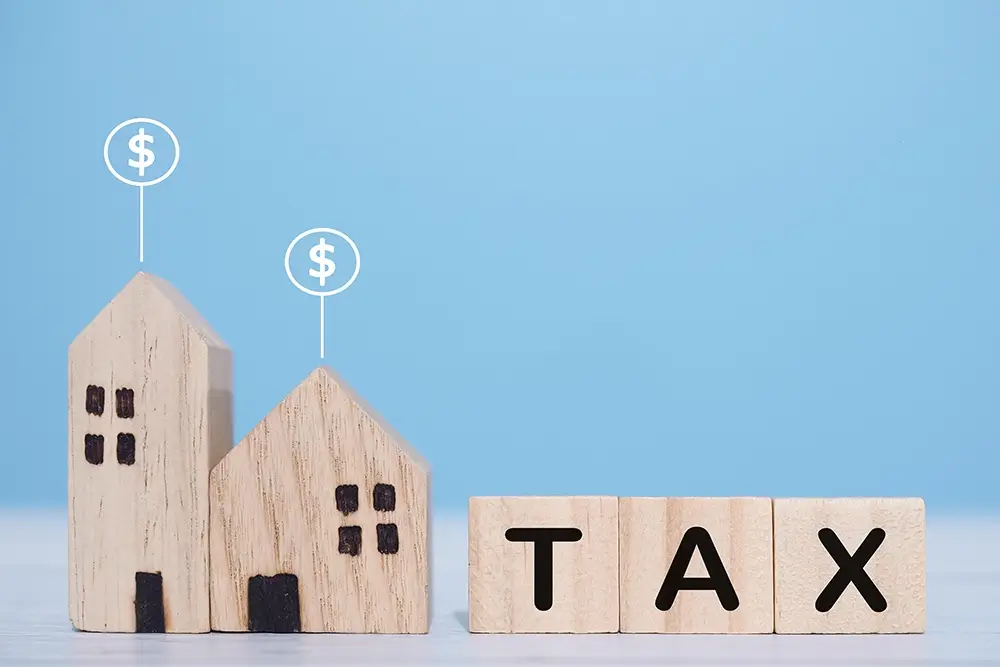
How Taxes Can Lower Your Mortgage Cost
Taxes don’t lower your monthly mortgage payment, but they can help you pay less in taxes overall.
Here’s the simple idea:
Higher deductions → Lower taxable income → Lower taxes owed
When your income goes down, the amount of tax you owe also goes down. That means you keep more money in your pocket. This is one way to understand how taxes affect your mortgage. Even though your payment stays the same, the savings show up during tax season. It also shows the tax impact on home loans, especially how property taxes affect your monthly mortgage payment and how they and mortgage costs work together over time.
Tax Impacts When Buying, Owning, and Selling
When you buy a home, you can lower your taxable income by claiming deductions for mortgage interest and, sometimes, loan points. These tax benefits start affecting your finances right away.
While you own your home, you can keep benefiting from deductions for mortgage interest and property taxes. This means understanding how taxes affect your mortgage is important every year. Over time, these deductions can help you reduce your total tax bill, showing how home loans impact your taxes as you make payments.
When you sell your home, you might qualify for a capital gains tax exclusion if you meet certain conditions. This exclusion can lower or even eliminate taxes on your profit. Planning ahead is important because property taxes and monthly mortgage payments can affect your short-term budget and long-term financial growth.
In the end, smart homeowners focus not just on what they pay each month but also on what they keep after taxes. By understanding these connections, you can make better choices, avoid surprises, and stay in control of your finances.
At Nclusive Financial, we guide you through the real tax impact on home loans, including how property taxes and mortgage costs work together. With fast pre-approvals and tailored solutions, we’re here to help you move forward with confidence.
Disclaimer: Loans made or arranged pursuant to a California Financing Law license. We are an Equal Housing Lender. As prohibited by federal law and the laws of the State of California, we do not discriminate on the basis of race, color, religion, national origin, sex, marital status, age, because income is derived from public assistance, or because the applicant has in good faith exercised any right under the Consumer Credit Protection Act.
Key Takeaways
- Only mortgage interest and property taxes may reduce your taxable income, while the principal portion of your payment does not qualify for any tax deduction.
- You must choose to itemize your deductions instead of taking the standard deduction in order to benefit from mortgage-related tax savings.
- There are strict IRS limits on how much you can deduct, especially for mortgage interest and state and local taxes, which can reduce the overall benefit.
- Tax advantages are usually strongest in the early years of your loan when interest makes up a larger part of your monthly payment.
- Understanding how taxes affect your mortgage helps you plan better, manage costs wisely, and make more informed long-term financial decisions.
References
Internal Revenue Service. (2025). Publication 936: Home mortgage interest deduction. https://www.irs.gov/publications/p936
Internal Revenue Service. (2026). Real estate taxes and mortgage interest deductions FAQs. https://www.irs.gov
NerdWallet. (2026). Mortgage interest deduction: How it works. https://www.nerdwallet.com
NerdWallet. (2026). Property tax deduction: Rules and limits. https://www.nerdwallet.com
NerdWallet. (2025). State and local tax (SALT) deduction limits. https://www.nerdwallet.com
Share this content :